Sleep. Stress. Muscles. Nerves. Energy. Blood sugar. Blood pressure.
Magnesium isn’t just another supplement trend. Your body uses it in more than 300 enzyme systems, including those involved in energy production, muscle and nerve function, blood-glucose control, blood-pressure regulation and normal heart rhythm.
And an estimated 48% of Americans aren’t getting enough.
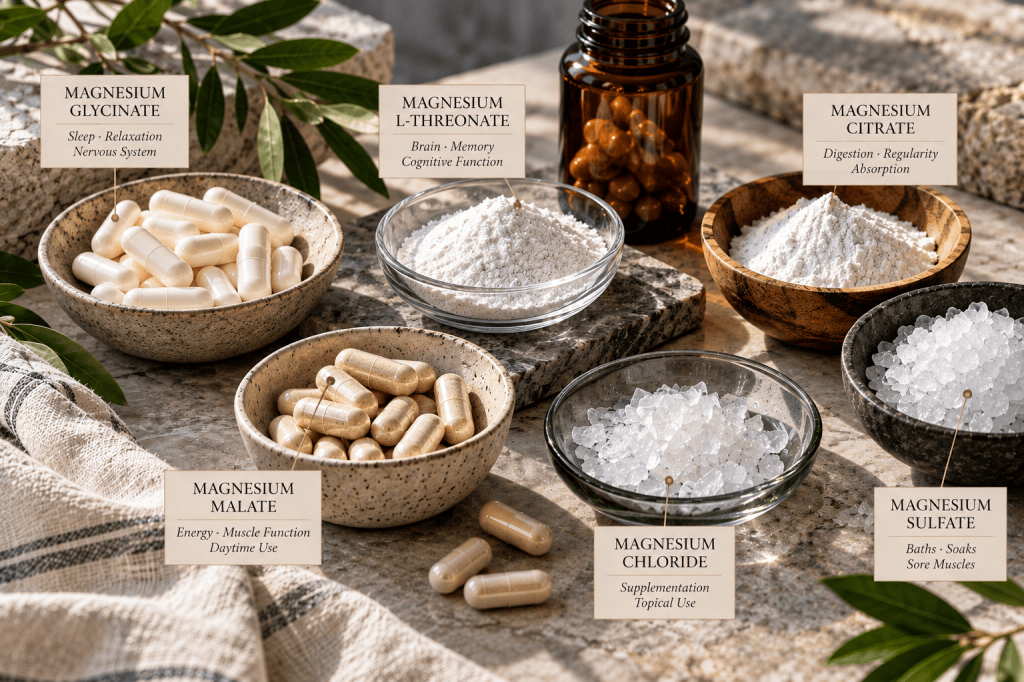
SIX TYPES. SIX VERY DIFFERENT JOBS.
MAGNESIUM GLYCINATE
SLEEP · RELAXATION · NERVOUS SYSTEM
Magnesium bound to glycine. Well absorbed, typically gentle on the digestive system, and the form we favor when sleep and evening relaxation are the priority.
MAGNESIUM L-THREONATE
BRAIN · MEMORY · COGNITIVE FUNCTION
Developed specifically for its potential neurological effects. Research has focused on brain magnesium levels, memory, learning and cognitive function.
MAGNESIUM CITRATE
DIGESTION · CONSTIPATION · ABSORPTION
A readily absorbed form that also draws water into the intestines. That makes citrate particularly useful when constipation relief is part of the goal.
MAGNESIUM MALATE
ENERGY · MUSCLE FUNCTION · DAYTIME
Magnesium combined with malic acid, a compound involved in cellular energy production. Often selected for daytime supplementation and muscle support.
MAGNESIUM CHLORIDE
SUPPLEMENTATION · TOPICAL PRODUCTS
A highly soluble form used in both oral supplements and topical products, including magnesium oils, sprays and bath flakes.
MAGNESIUM SULFATE
BATHS · SOAKS · SHORT-TERM MEDICAL USE
The magnesium compound found in Epsom salts. Best known for bath and soaking products; magnesium sulfate also has established medical uses in specific clinical settings.
LOOKING FOR BETTER SLEEP?
START WITH GLYCINATE.
We already did the comparing and found the top-rated options.
→ SEE OUR MAGNESIUM GLYCINATE PICKS
(As an Amazon Affiliate, we may earn from qualifying purchases)
This content is for informational purposes only and is not medical advice. Holy Basil is not intended to diagnose, treat, cure or prevent any disease. Research varies by outcome and includes human, animal and laboratory studies. Supplements may interact with medications or may not be appropriate for everyone; consult a qualified healthcare professional regarding your individual circumstances.


Leave a comment