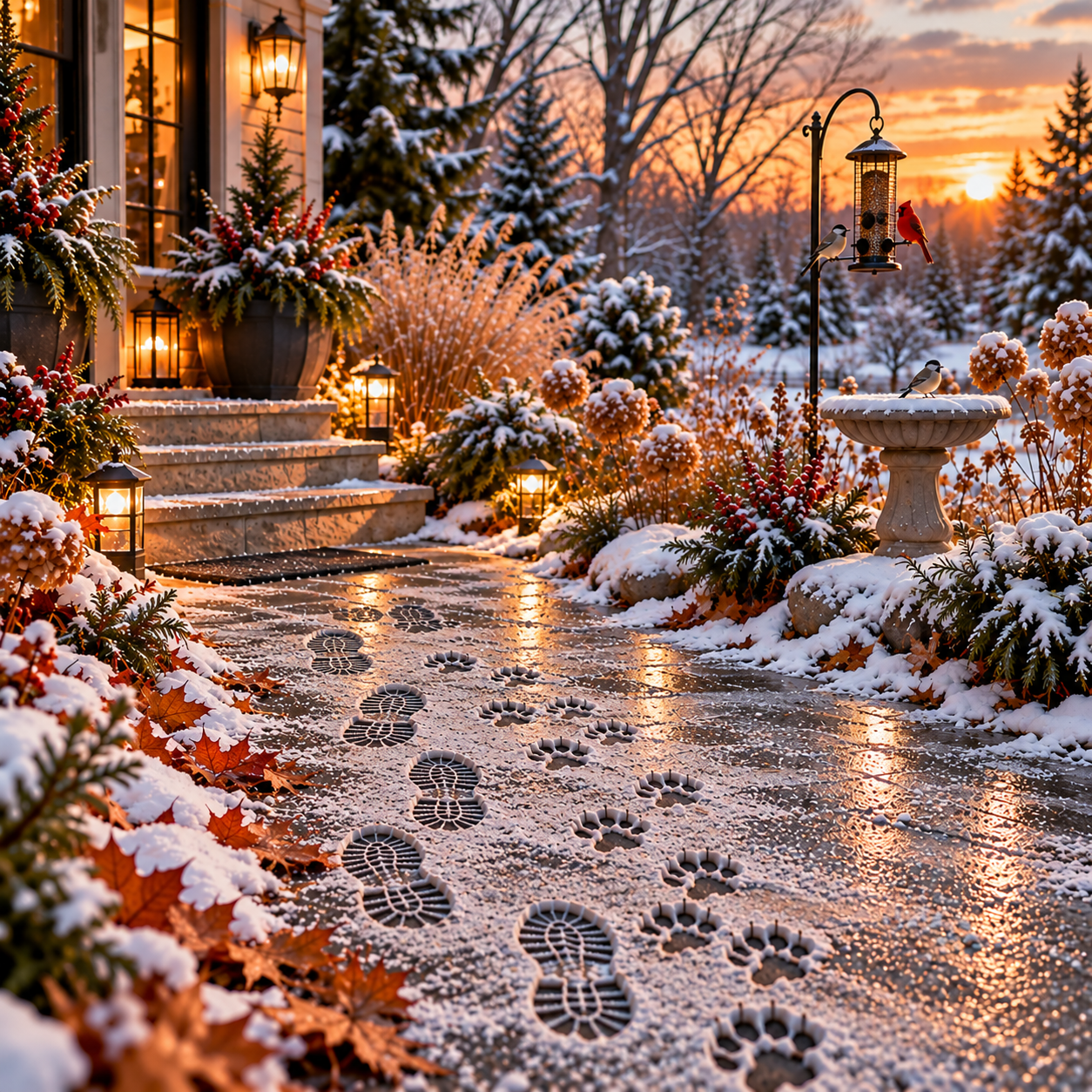
Cold weather changes more than the temperature. Food and water become harder for wildlife to find, winter shelter matters, and everyday things like frozen sidewalks and road salt create new considerations for our pets.
A few seasonal habits—from how we feed the birds to what we put on our dogs’ paws—can make the season easier and safer for the animals around us:
Protect Paws Before Winter Walks
Cold, ice, snow and deicing chemicals can leave paw pads dry, irritated or cracked. Dog boots provide a physical barrier; paw wax or balm can help when boots aren’t practical, and paws should be wiped clean after walks on treated surfaces.
Use the Right Bedding in Outdoor Shelters
Skip blankets, towels and hay; use straw. Fabric and hay can hold moisture and leave an outdoor animal colder, while loose straw repels moisture and creates insulating pockets where an animal can burrow.
Drive Mindfully During Deer Rut
October through December is peak deer-movement season across much of the northern U.S., with activity typically highest in November. Be especially alert around dawn and dusk, slow down where deer are common, and remember: if one deer crosses, others may be close behind.
Keep Bird Feeders Clean
Winter feeding can help birds, but a dirty feeder can concentrate pathogens along with birds. Clean feeders regularly, keep seed dry, discard anything damp or moldy, and clean up spoiled seed accumulating underneath.
Provide Water—Safely
Birds still need reliable water when natural sources freeze. Keep baths clean and unfrozen with fresh water or a properly designed birdbath heater; never add salt, antifreeze or other chemicals to prevent freezing.
Rethink Rock Salt
Traditional sodium-chloride rock salt doesn’t disappear when the ice does. It can damage vegetation, contribute chloride to waterways, corrode metal and irritate or dry pets’ paws—switch to a more pet- and environmentally considerate deicer where possible.
Read more: How to Choose a Pet- and Environmentally Safer Ice Melt
Leave Some Fallen Leaves
Leave patches of fallen leaves in garden beds, beneath shrubs or along less-used edges of the yard. Fireflies, butterflies, moths and other insects can overwinter in leaf litter as eggs, larvae or pupae; removing or shredding every leaf can remove that habitat with them.
Check Around Your Car Before You Leave
Outdoor cats and small wildlife may shelter beneath vehicles or near tires, particularly during cold or bad weather. A quick look beneath and around the vehicle before pulling away can prevent an entirely avoidable injury.
Make Outdoor Shelters Smaller, Not Roomier
A giant doghouse isn’t necessarily warmer. An appropriately sized shelter retains body heat better; it should also be elevated from wet or frozen ground, protected from prevailing wind and kept dry.
What did we miss? If there’s a cold-weather practice you use to protect pets, wildlife or the environment, share it in the comments. We may add the best tips to this guide.
Leave a Reply