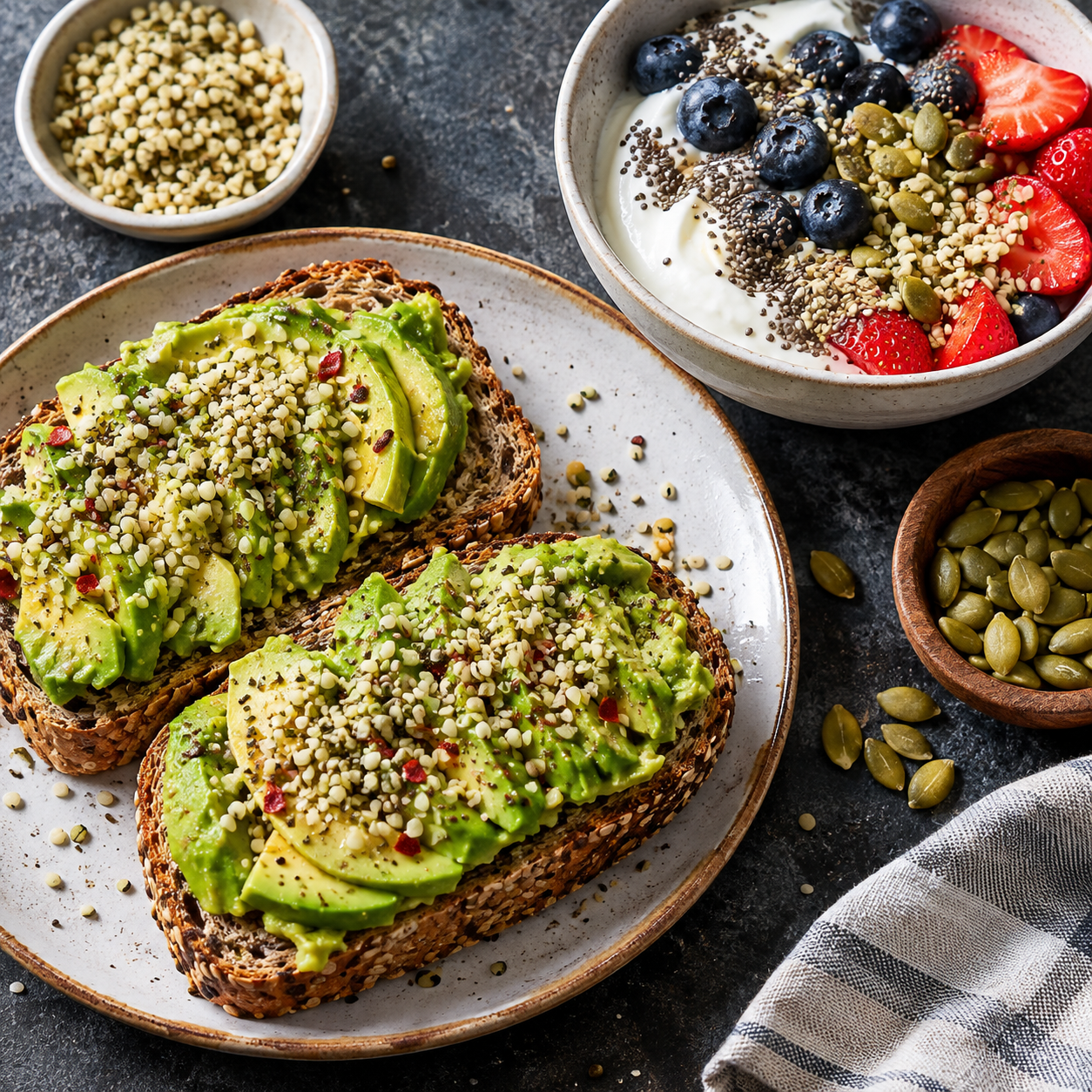
Getting more protein doesn’t have to mean expensive supplements, endless chicken breasts, or an entirely new grocery list. Learning how to add more protein to your diet can be as simple as sprinkling hemp hearts over your avocado toast, swapping sour cream for Greek yogurt, or making a few clever substitutions in recipes you already love.
Same foods. More protein. It’s that simple.
Add Protein-Rich Garnishes
Seeds, nuts, and other protein-rich toppings offer an easy way to increase the nutritional value of everyday meals without altering the original dish.
| Ingredient | Where to Use It | Protein per Serving |
|---|---|---|
| Hemp hearts | Avocado toast, salads, cereal, mixed into breadcrumbs, yogurt | 10 g per 3 tbsp |
| Nutritional yeast | Pasta, popcorn, eggs, roasted vegetables | 4–5 g per 2 tbsp |
| Pumpkin seeds | Salads, soups, yogurt, grain bowls | 8–9 g per 1 oz |
| Chia seeds | Oatmeal, yogurt, smoothies, cereal | 4–5 g per 2 tbsp |
| Sunflower seeds | Salads, vegetables, oatmeal, baked goods | 5–6 g per 1 oz |
| Chopped peanuts | Stir-fries, salads, noodles, oatmeal | 7 g per 1 oz |
| Sliced almonds | Oatmeal, yogurt, salads, roasted vegetables | 6 g per 1 oz |
Substitute Ingredients to Increase Protein
Strategic ingredient substitutions can significantly increase protein content while preserving the flavor and familiarity of your favorite recipes.
| Instead Of | Use | Protein Comparison |
|---|---|---|
| All-purpose flour | Chickpea flour | Approximately 6 g per ¼ cup vs. 3–4 g in regular flour |
| All-purpose flour | Amaranth flour | Approximately 4–5 g per ¼ cup vs. 3–4 g in regular flour |
| Sour cream | Plain Greek yogurt | Approximately 9–10 g per 100 g vs. 2–3 g in sour cream |
| Regular pasta | Chickpea or lentil pasta | Approximately 11–14 g per 2 oz dry vs. 7 g in regular pasta |
| Water in oatmeal | Dairy or soy milk | Adds approximately 7–8 g per cup of milk |
| Regular yogurt | Plain Greek yogurt or skyr | Approximately 15–18 g per 170 g vs. 6–8 g in regular yogurt |
| White rice | Quinoa | Approximately 8 g per cooked cup vs. 4 g in white rice |
| Regular cream cheese | Blended cottage cheese | Approximately 12–14 g per ½ cup vs. 3–4 g in cream cheese |
| Regular milk | Ultra-filtered milk (like Fairlife) | Approximately 13 g per cup vs. 8 g in regular milk |
For baking, replace ¼ cup of every 1 cup of regular flour with chickpea flour or amaranth flour.
Incorporate Protein-Rich Ingredients Into Existing Recipes
Many protein-rich ingredients can be blended, stirred, or folded into existing recipes without substantially changing their flavor or texture.
| Ingredient | Where to Add It | Protein per Serving |
|---|---|---|
| Cottage cheese | Scrambled eggs, omelets, egg bites, pancake batter | 6–7 g per ¼ cup |
| White beans | Blend into creamy soups, sauces, mashed potatoes | 7–9 g per ½ cup |
| Silken tofu | Blend into smoothies, pudding, creamy sauces | 4–6 g per ½ cup |
| Cooked lentils | Mix into ground beef for tacos, meatballs, pasta sauce | 9 g per ½ cup |
| Plain Greek yogurt | Stir into dips, dressings, creamy sauces | 5–6 g per ¼ cup |
| Nonfat dry milk powder | Mix into oatmeal, pancake batter, mashed potatoes, baked goods | 6–8 g per ¼ cup |
| Powdered peanut butter | Stir into oatmeal, yogurt, smoothies, pancake batter | 6–8 g per 2 tbsp, depending on brand |
| Edamame | Blend into guacamole, dips, or pesto | 9 g per ½ cup |
| Unflavored protein powder | Mix into pancake batter, oatmeal, smoothies, or yogurt | Commonly 20–25 g per scoop, depending on product |
Protein values are approximate and vary by brand and preparation method.
Explore Unflavored Protein Powders for Cooking & Baking → #ad
Have a clever trick for adding protein to everyday meals? Share it in the comments. We’re always interested in discovering new ways to add more protein to your diet without overcomplicating what’s on the menu.
Leave a Reply